

Intelligence
Intelligence
Markets covered
- Germany
Figures maintained by INTRIC
Live figures for Germany — rental yields, mortgage rates, price per square metre and transfer costs — alongside buying guides for the market we work in.
Market snapshot
The German market, in figures
| Market | Rental yield | Mortgage rate | Price / sqft | Transfer tax |
|---|---|---|---|---|
Germany In briefInvesting in Europe's Largest Economy -- Berlin, Munich, Frankfurt, and the German Real Estate Market | 3.4% | 3.7% | €504 | 5.0% |
Gold rule marks the strongest figure in each column.
Prices converted to EUR at today's rate.
Figures are indicative, drawn from INTRIC's own market data, and not a substitute for professional advice.
Go deeper
Compare this market across every metric.
Guides for these markets
Published by INTRIC

Country guide
Germany Investor Guide
Investing in Europe's Largest Economy -- Berlin, Munich, Frankfurt, and the German Real Estate Market
Germany · 24 min read
Read the guide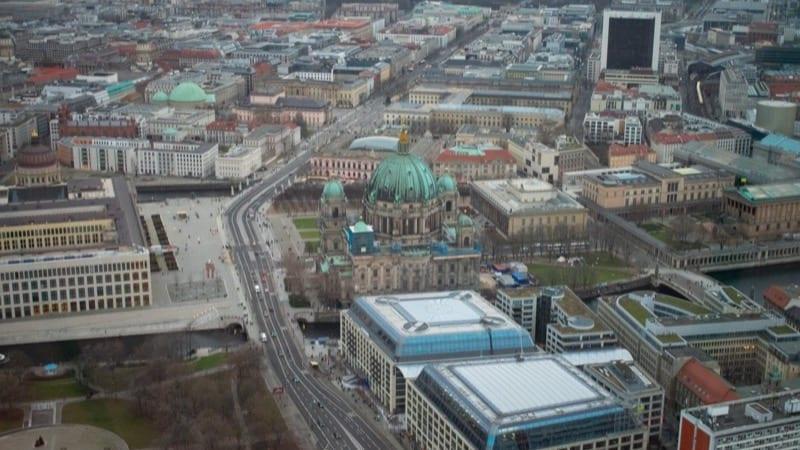
City guide
Berlin
Berlin is Europe's capital of creativity and one of its most resilient property markets. Germany's largest city by population (~3.8 million) and the political heart of the EU's largest economy, Berlin has transformed over three decades from a divided post-Cold War curiosity into a global hub for startups, art, music and progressive urbanism. The property market is anchored by strong tenant protections, a chronic supply shortfall, and rising rents that consistently outpace national averages. Average prices in central districts run EUR 5,500-9,500 per square metre, with rental yields of 3.2-4.5% gross. The 2025 federal coalition's housing legislation extending Mietpreisbremse rent controls through 2029 keeps yield compression real -- but the structural undersupply (Berlin needs ~20,000 new units per year and consistently builds half that) keeps capital values trending up. For international investors, Berlin offers EU-grade legal certainty, deep liquidity, English-speaking professional services, and a market that proved its defensive credentials during the 2022-24 rate cycle. The catch: yields are thin and tenant law tilts heavily toward the tenant. Best suited to long-term capital preservation buyers rather than yield hunters.
Germany · 8 min read
Read the guide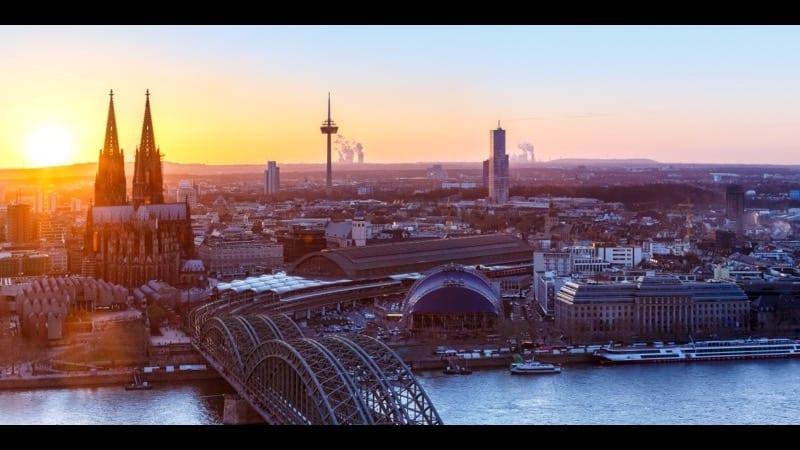
City guide
Cologne City Guide
North Rhine-Westphalia's largest city and the cultural and media heart of the Rhineland, Cologne offers international investors a deep, liquid residential market within Germany's most populous metropolitan region, Rhine-Ruhr. The city's economy blends media and broadcasting, insurance, logistics and a major trade-fair complex, supporting steady, broad-based rental demand. Prime values concentrate in leafy Lindenthal and the central Innenstadt and Neustadt, where existing apartments trade around €4,200–€4,330 per square metre and new-build stock reaches roughly €7,310 per square metre; mid-market gentrifiers Ehrenfeld and Nippes, among the German neighbourhoods forecast to see the strongest 2026 price growth, combine accessibility with appreciation potential. Cologne's market-active vacancy rate sits between 0.5% and 1.2%, with near-zero effective vacancy in high-demand quarters such as Ehrenfeld and Neustadt. Rents remain anchored by the official Mietspiegel, keeping gross yields modest at roughly 3.0% citywide (a 2.3–4.2% spread driven primarily by location). With prices up about 5% year-on-year as the market recovers from the 2022–2023 correction, mortgage rates stabilising, and a base-case five-year cumulative growth estimate near 20%, Cologne enters 2026 as a steady, income-and-growth core market for buyers prioritising liquidity and tenant depth.
Germany · 7 min read
Read the guide
Neighborhood guide
Charlottenburg
Old West Berlin's polished heart, Kurfurstendamm shopping, the KaDeWe department store, Charlottenburg Palace, and the established residential heart of the western city.
Berlin, Germany · 5 min read
Read the guide
Neighborhood guide
Friedrichshain
East Berlin's young heart, RAW Gelande's club scene, the East Side Gallery, and Berlin's tech-startup capital around Mediaspree.
Berlin, Germany · 5 min read
Read the guide